
A couple of weeks ago I was delighted to join up with Duhallow Social Farming in Newmarket in North Cork to give a demonstration and talk on natural orchard care.
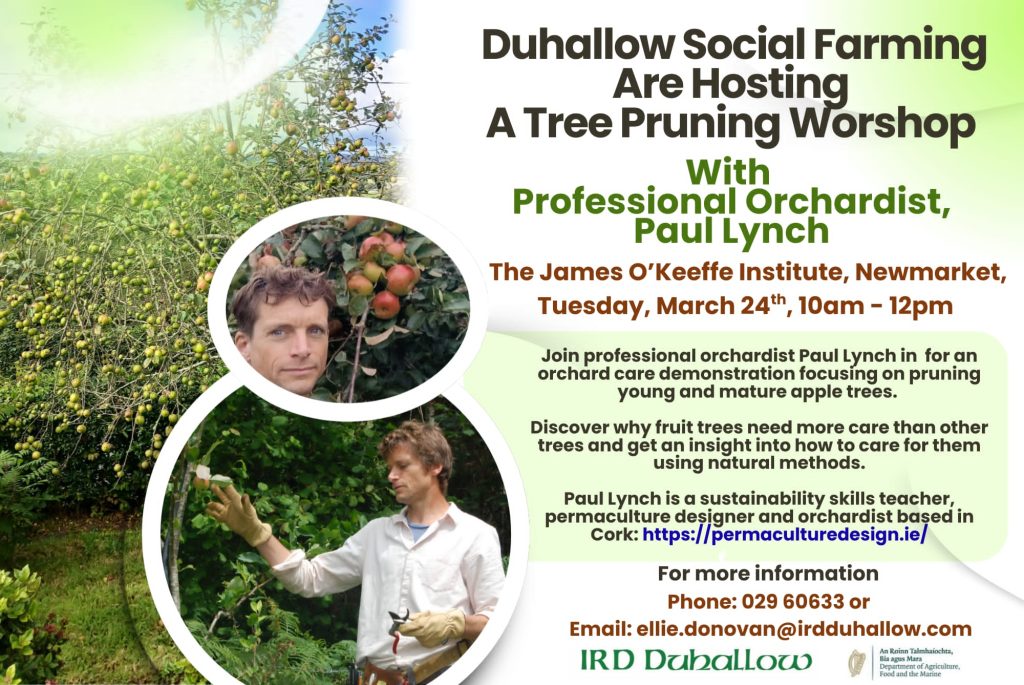
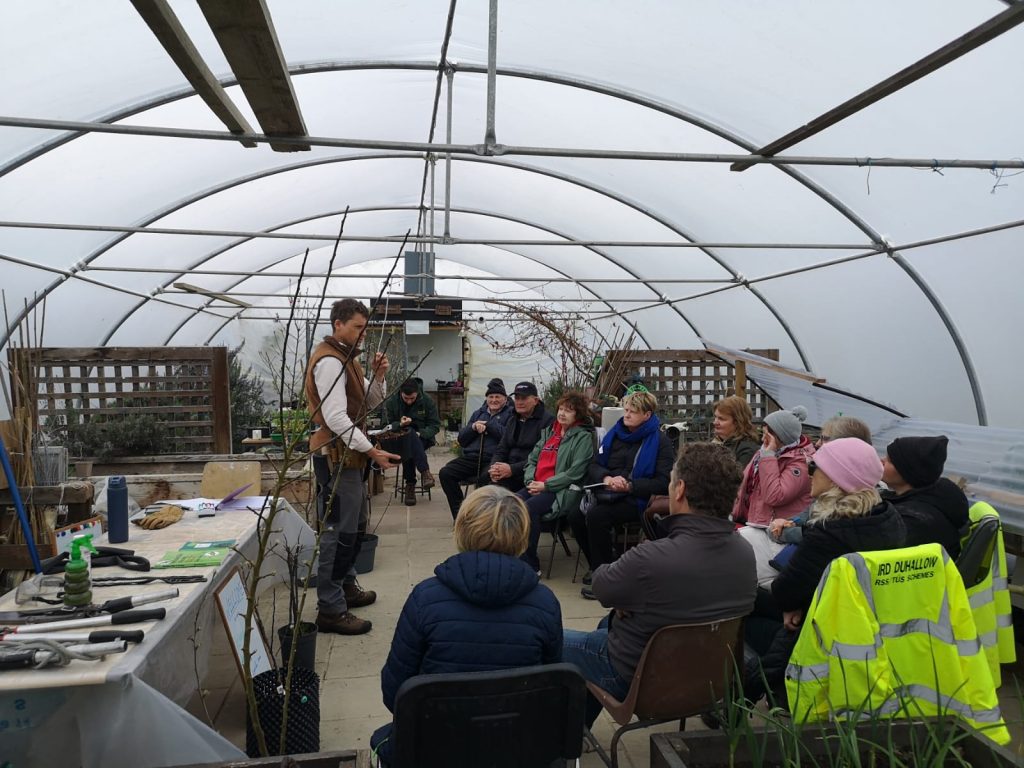
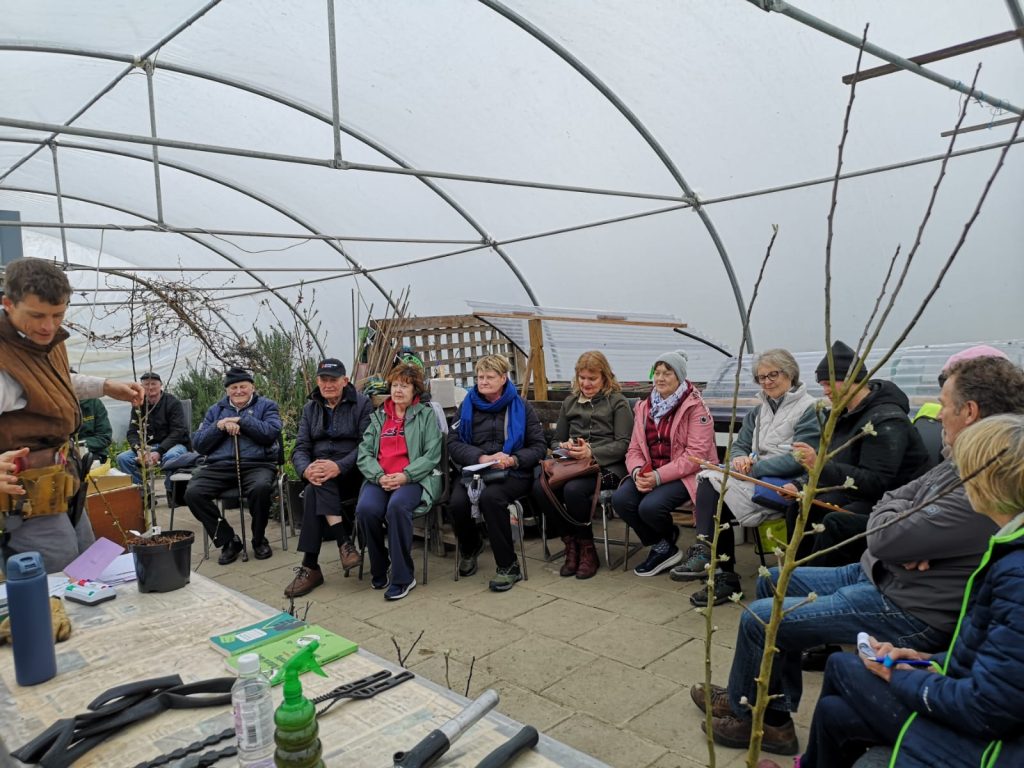
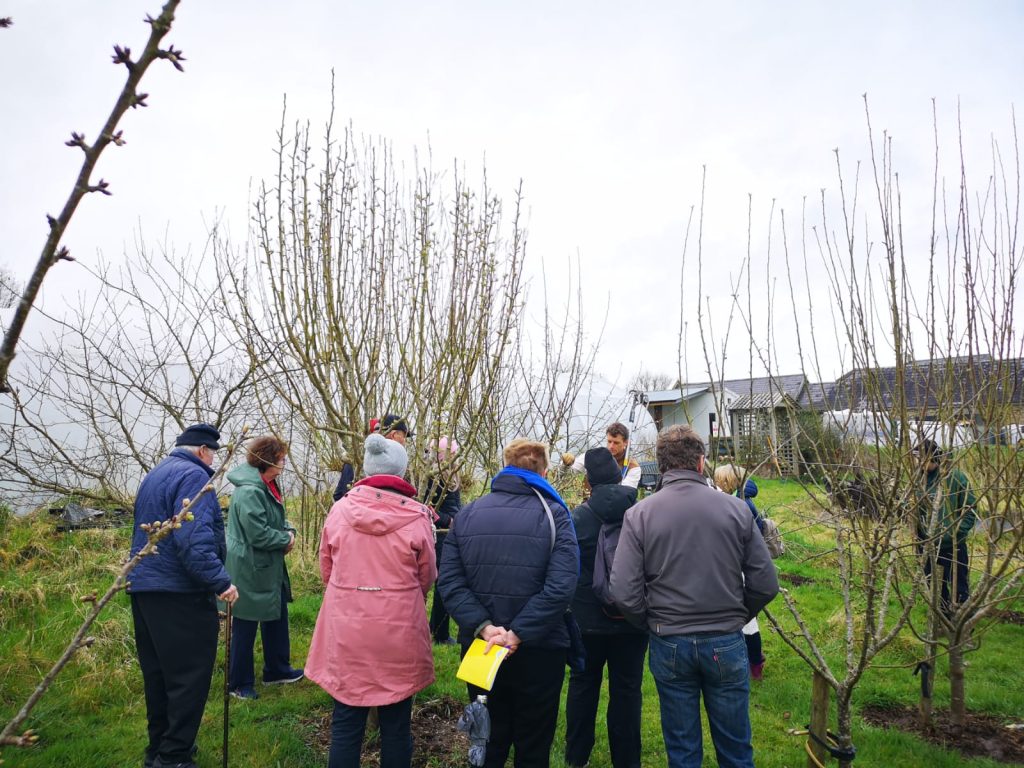
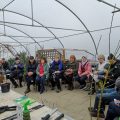
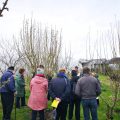
On the 24th of March I joined up with about a dozen local apple tree enthusiasts at the Duhallow Social Farming headquarters based at IRD Duhallow. Participants included farmers, retired farmers and gardeners all keen to get answers and ideas for how to best look after their precious apple trees. We were joined by Ellie Donovan and the Duhallow Social Farming team who organised and facilitated the event.
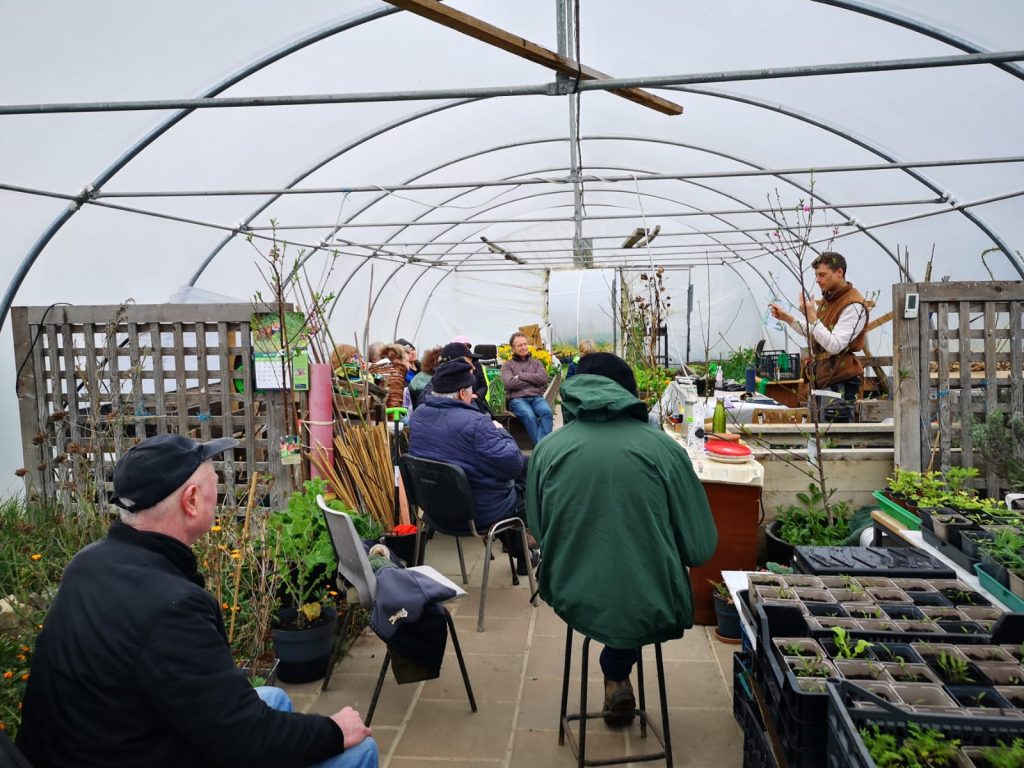
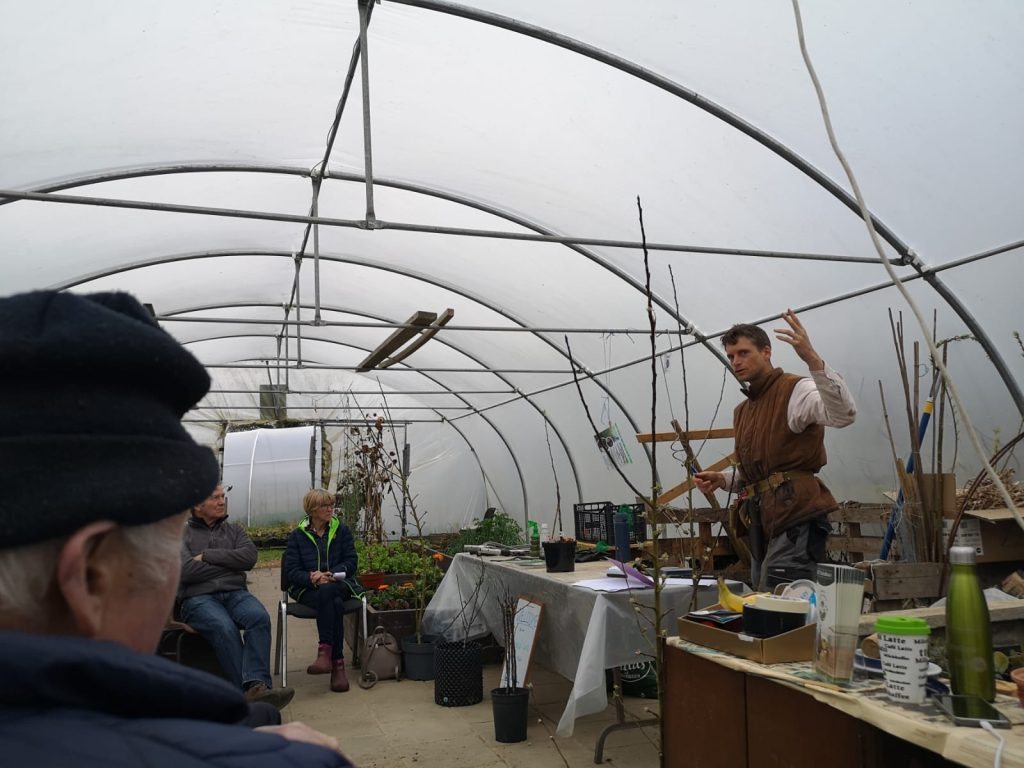
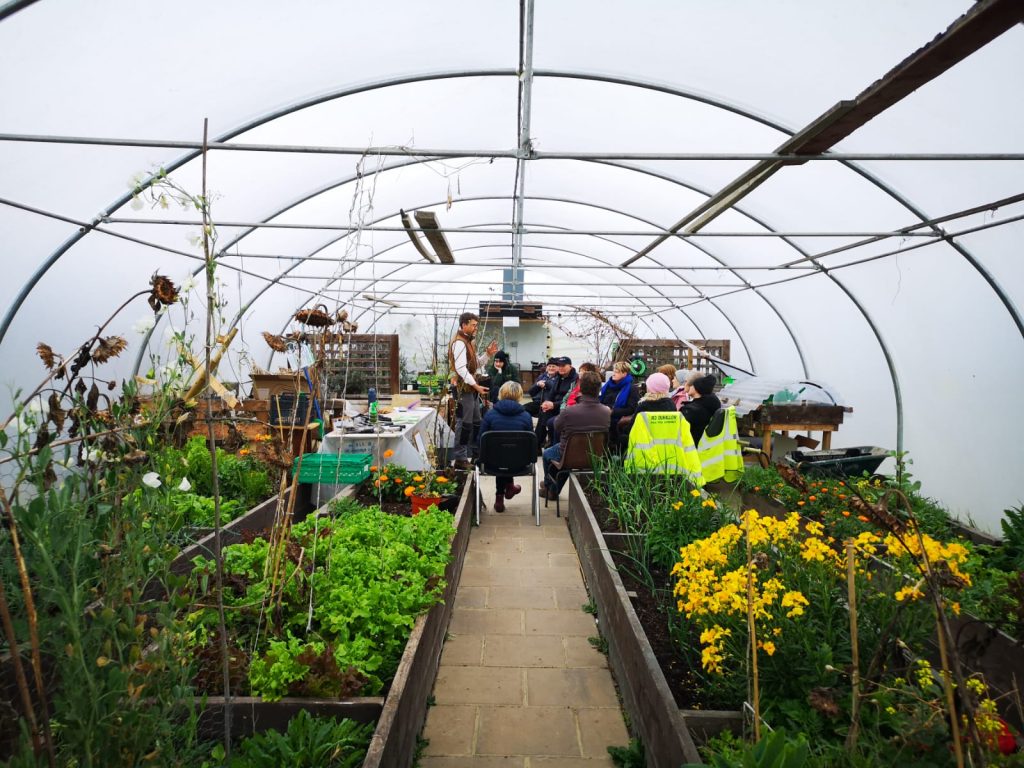
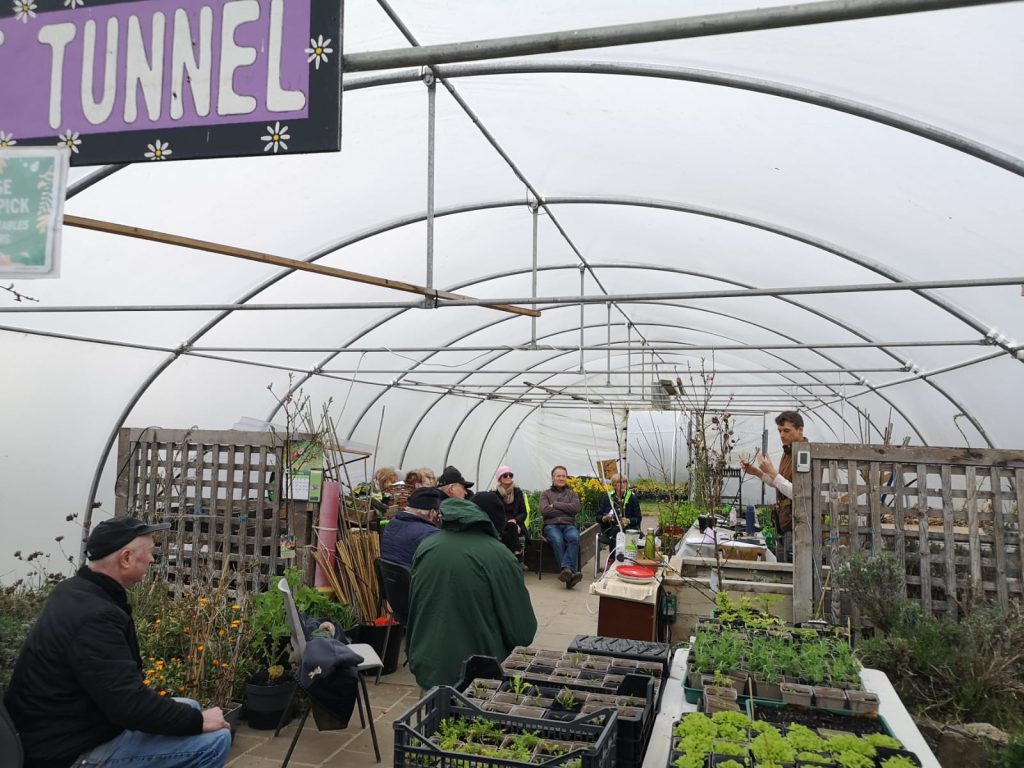
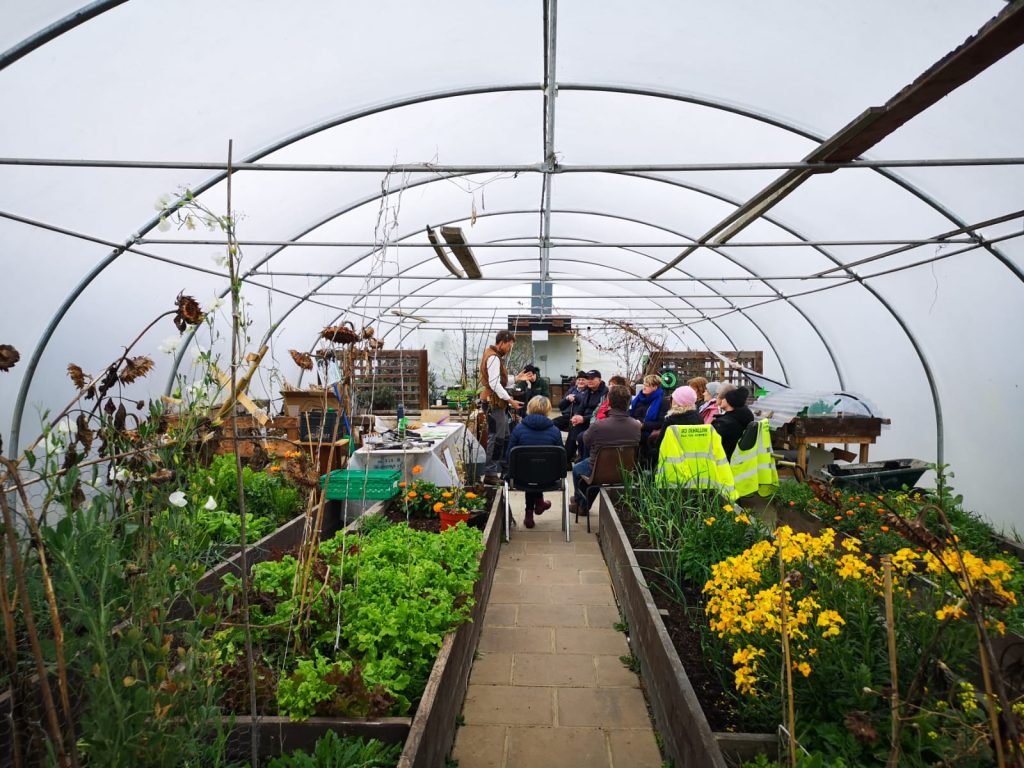
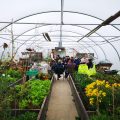
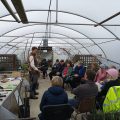
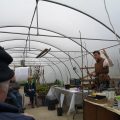
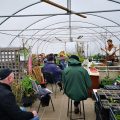
The workshop took place in the Duhallow Social Farming orchard and in one of the spacious polytunnels on site, which are conveniently located beside each other.
Why do we prune fruit trees?
After the introductions I asked my usual opening question: “Why is that most trees know how to grow without training and pruning, but fruit trees require so much care and attention during their lives?”
Unless you are in the orchadist business this may be an unusual and entirely new proposition. It cuts deeper than the usual text book advice that often list rules and procedures for orchard care that more ressemble instructions for manufacture rather than considerations for dealing with a living organism.
Fruit Tree Grafting
The participants correctly thought that all of this pruning had something to do with the fruit – which is exactly the right track. The fact is that practically every comercially grown apple has been grown on a tree that was grafted. With apple trees, grafting is a procedure that joins two (usually) different varieties of apple together – the top part is called the “scion” and it determines the variety of fruit to be borne, the bottom part is called the “rootstock” and it will have certain desirable characteristics regarding the tree mature size and disease resistance. This union allows the perpetual cloning of a desirable, once indidual tree variety such as Granny Smith or Cox’s Pippin etc. Otherwise those varieties would have been one-off individual trees, fated to live and die after a time.
New apple varieties
Those apple trees may of course reproduce sexually via pollenation crossing with another variety to produce apples, but each seed of those apples would produce a new individual tree with new individual characteristics, not a copy of either of the parent trees. Of course if all these pips were grown out, in many years we may find one of the offspring to have its own desirable characteristics, and so a new variety would be discovered and, perhaps, added to the thousands of varieties perpetually grafted through the ages.
The natural form of fruit trees
Now this grafting – although very useful – quite upsets the natural growing pattern of the tree, and some careful pruning therapy in subsequent years is required to help the tree grow to a natural shape, which for most fruit trees is a central leader form, somewhat like a classic Christmas tree. For our purposes we may want the tree to grow in an unnatural forms so as to increase the fruit density, to keep the tree branches low and reachable or to grow in two-dimensions only such as with fan or espallier forms and thereby take advantage of the warmth of a south or west facing wall.
My advice to the group in Newmarket was that all of these fruit tree forms can be done and they can be done well, but the further we deviate from the natural centre leader shape the more work we make for ourselves in maintainance, moreover the more knowledge we need in the first place to know how even to attempt this maintenance successfully. Suffice it to say that the majority of my professional pruning work consists of retrieving tangled apple trees that have had some initial pruning done to create the classic (but unnatural) open-centre shape.
Fruit tree pruning and tying demonstration
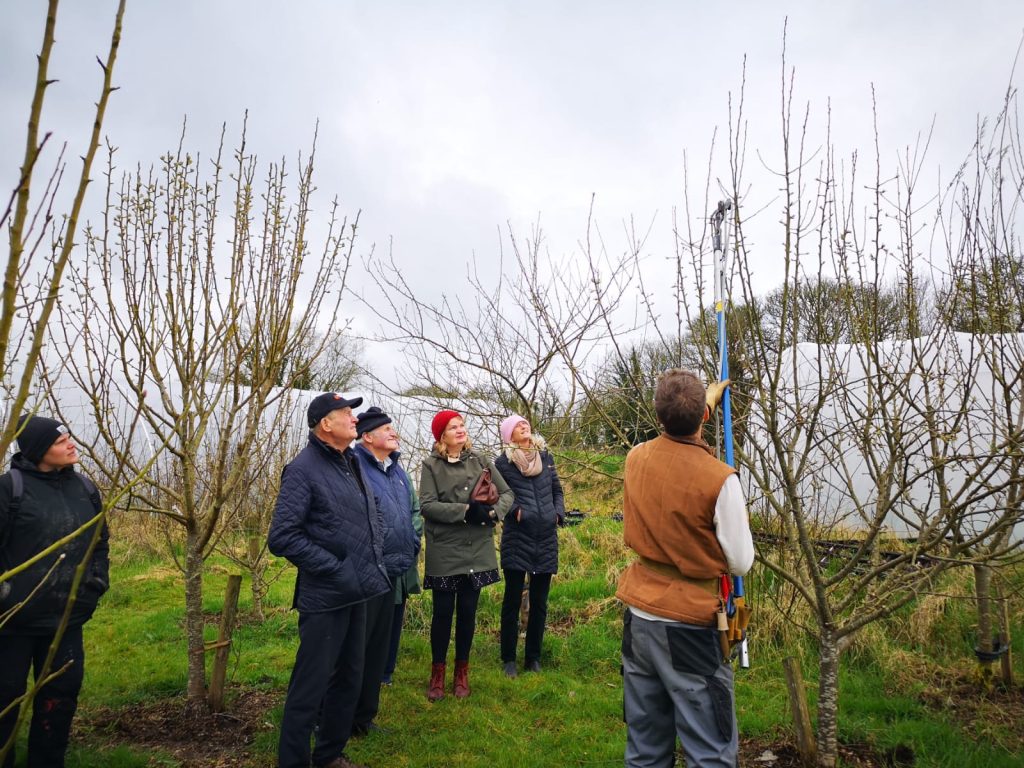
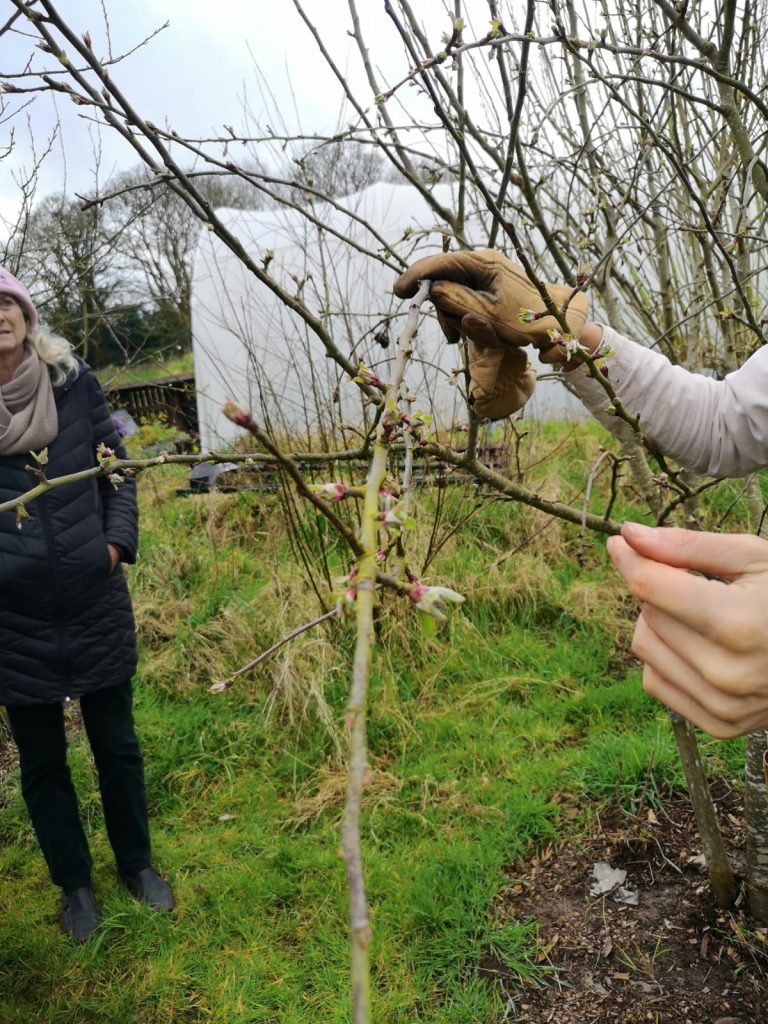
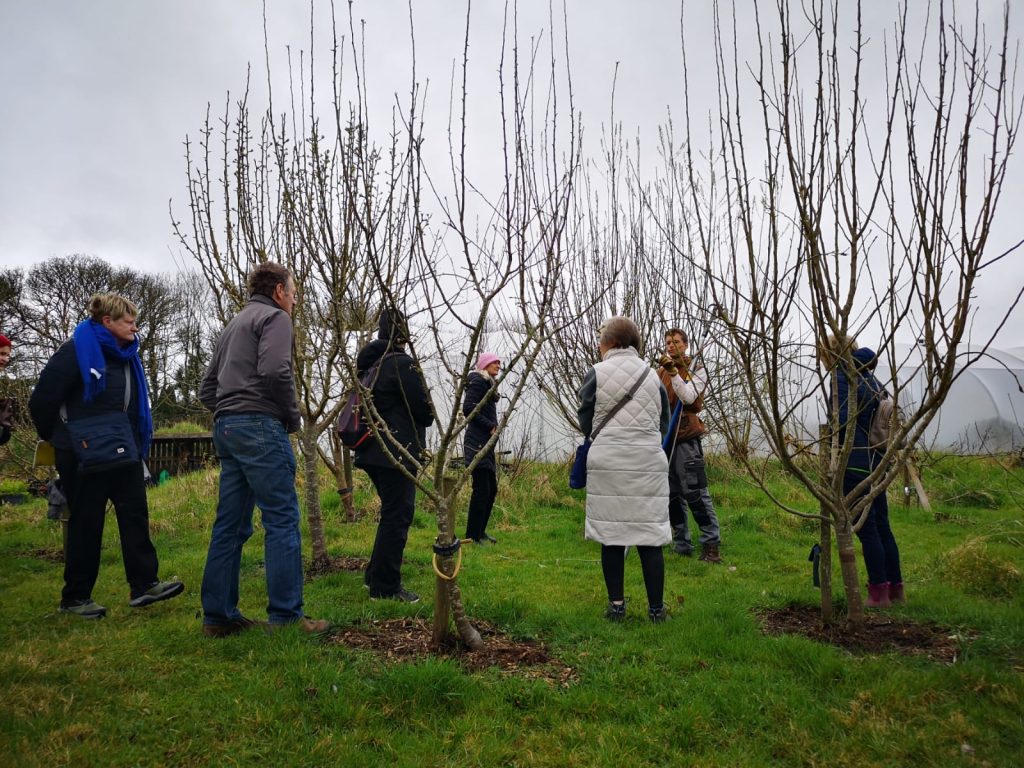
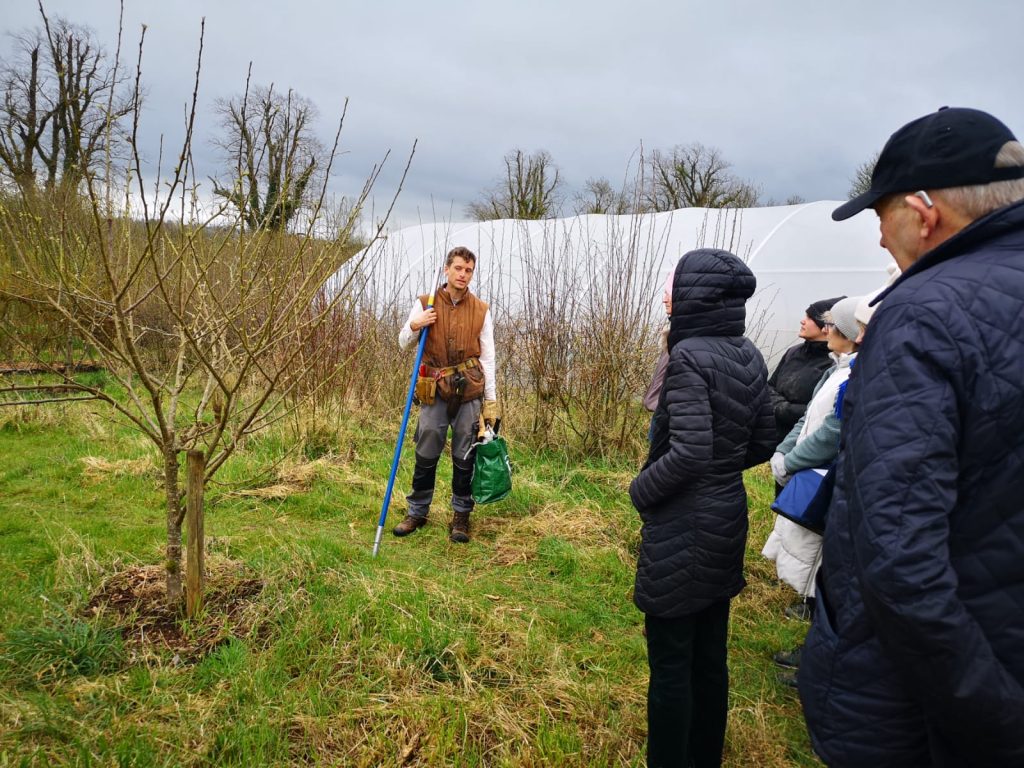
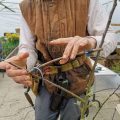
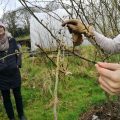
Outside in the orchard I demonstrated some of these principles and pruning techniques. Besides pruning I have developed various tying systems using old rubber bicycle tube inners to create natural tree shapes from the pliable branches. Branches one, two, three, and sometimes even four years old can be bent into shape and held with temporary ties for a few months before taking the new shape permanently. Besides teaching I was also commissioned to begin restoring the orchard on the site which comprises about forty maturing trees, and here I made extensive use of such tree ties.
Demonstration grafting, splaying and pruning
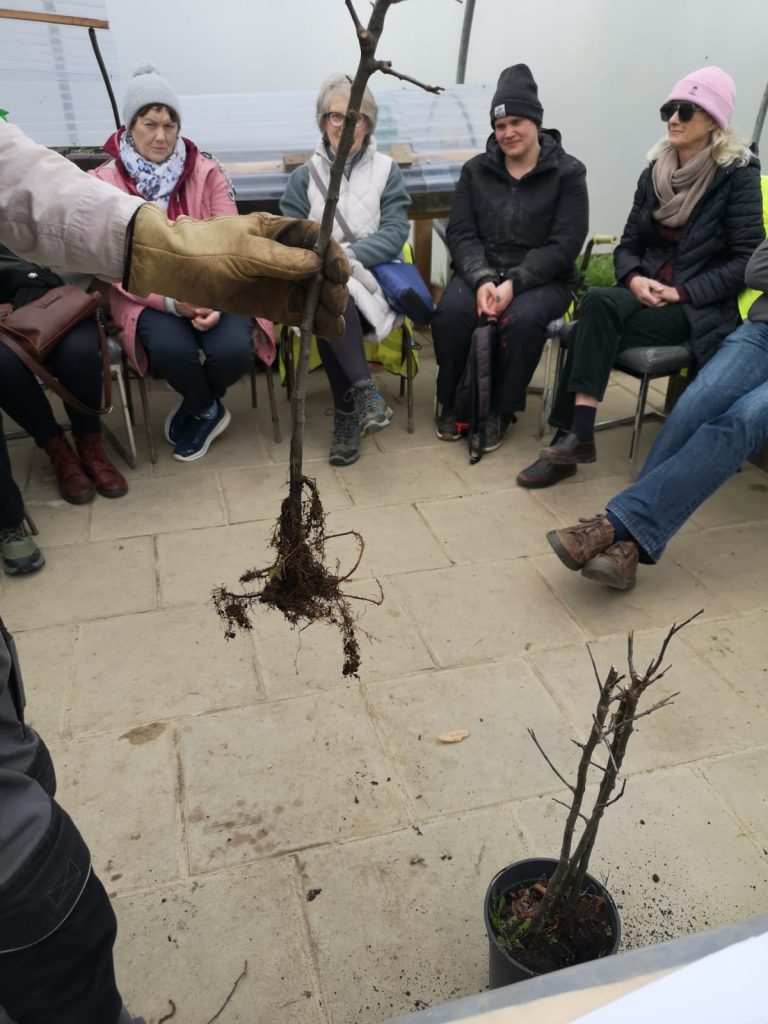
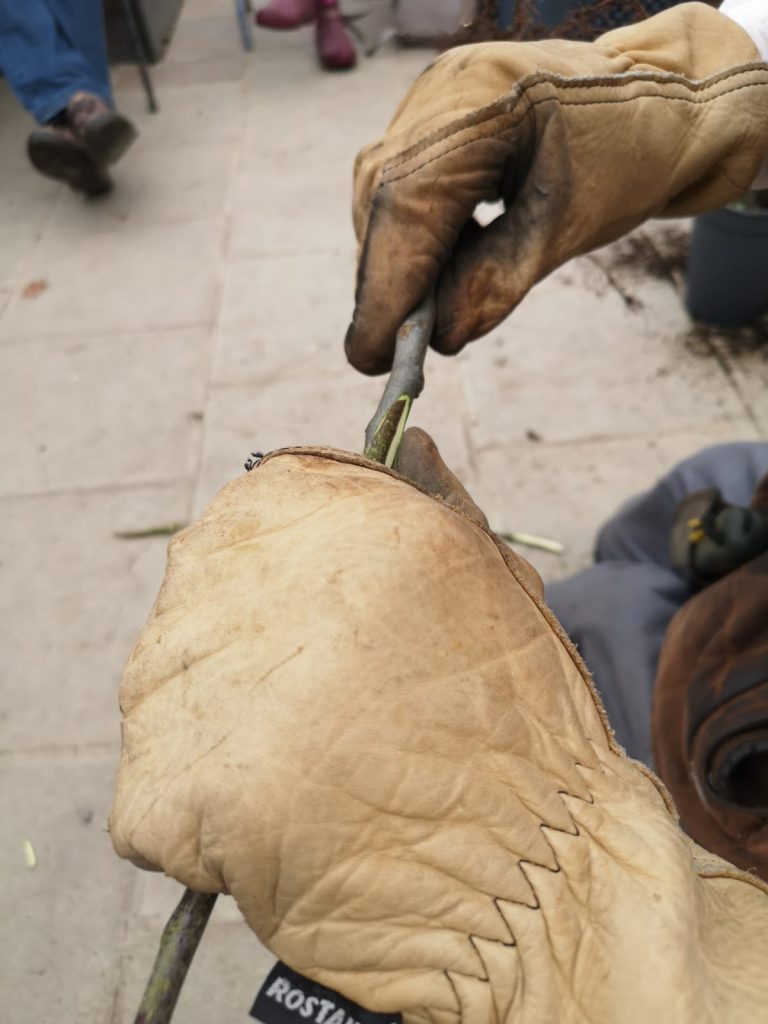
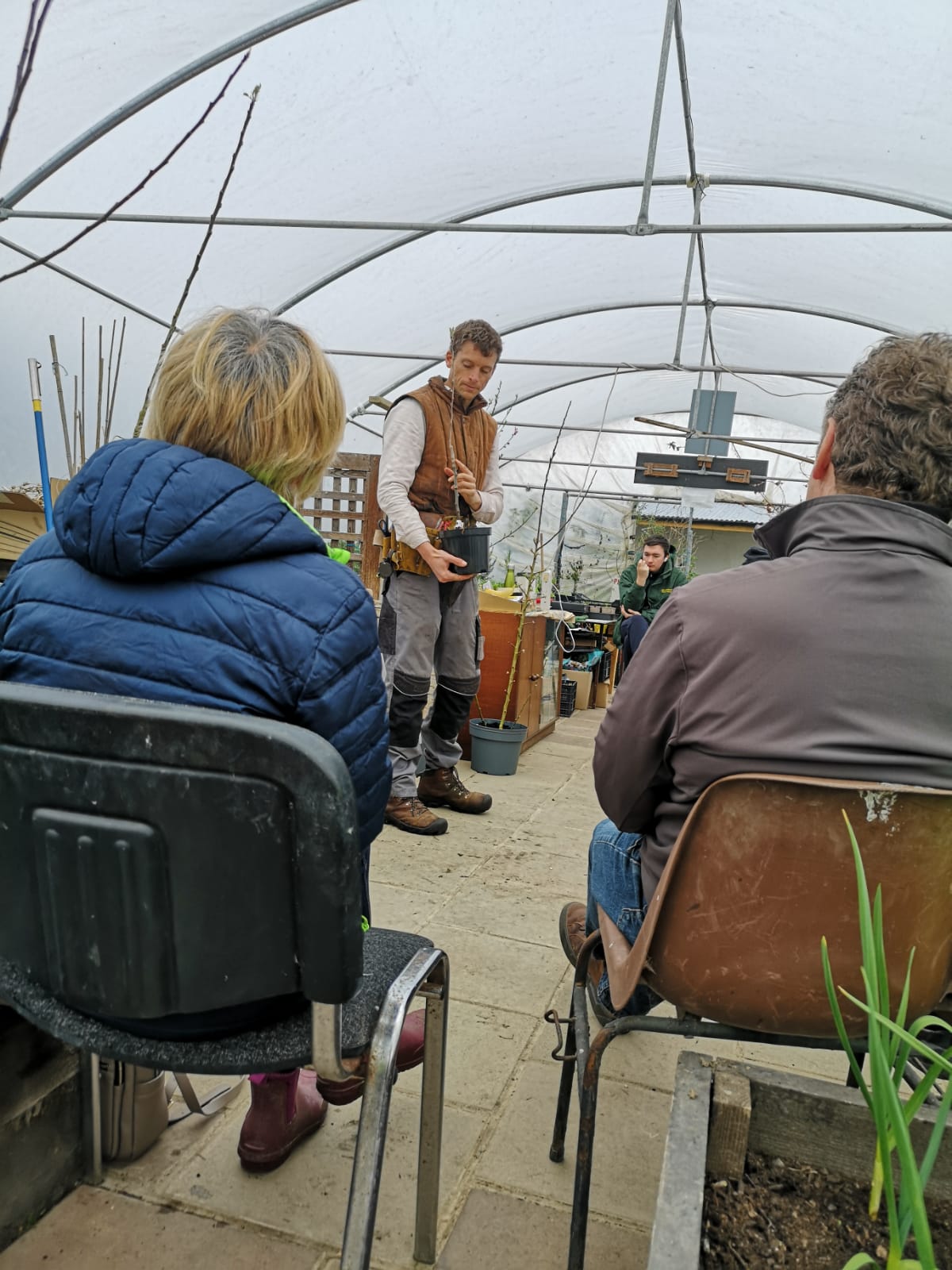
While I was on my second pruning demonstration tree however we got rained back into the tunnel. I had plenty material prepared for just such a situation and so demonstrated on potted trees and did some demonstration grafting, using scion wood from the Duhallow Social Farming orchard and a rootstock that I had brought with me. We potted the tree there and then to add to the orchard in a couple of years time when it is ready to plant out.
Social farming feeds the soul
I was delighted to meet people interested in caring for their fruit trees and to share my lifetime interest in orchard care and my decade of professional experience caring for thousands of trees for hundreds of customers. Most of my work to date has been for private customers and I enjoyed the approaching the topic with a social farming focus. I won’t be pruning orchards forever and the more people who learn these skills the better off we will all be regarding rural life, culture and community food security.
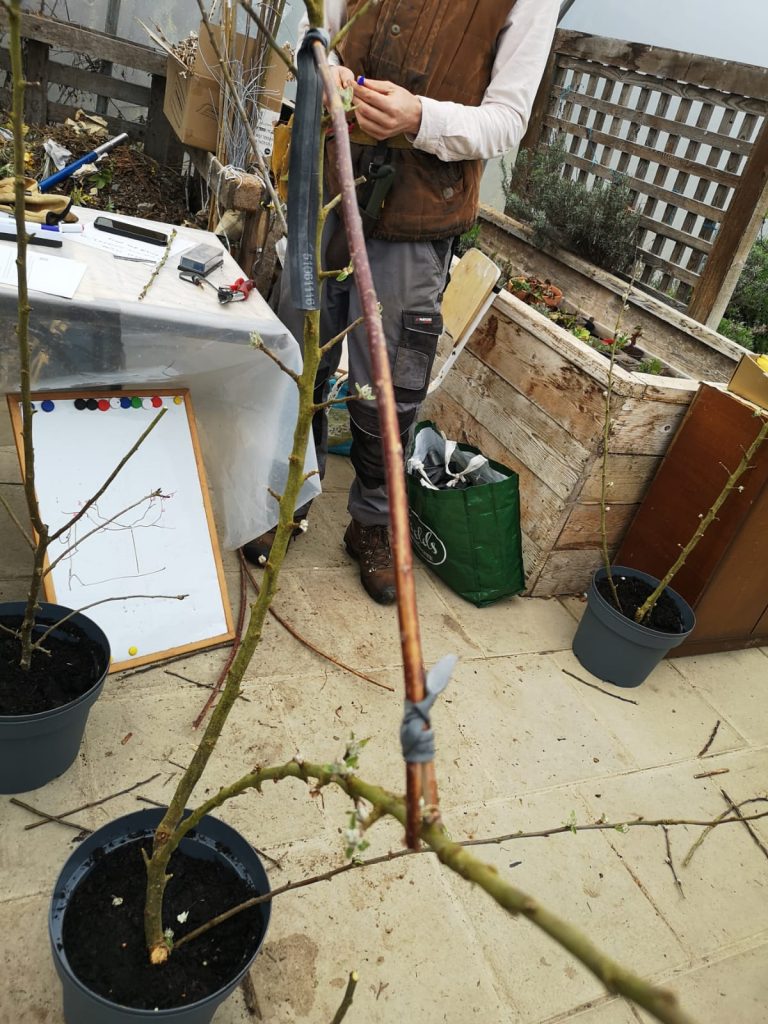
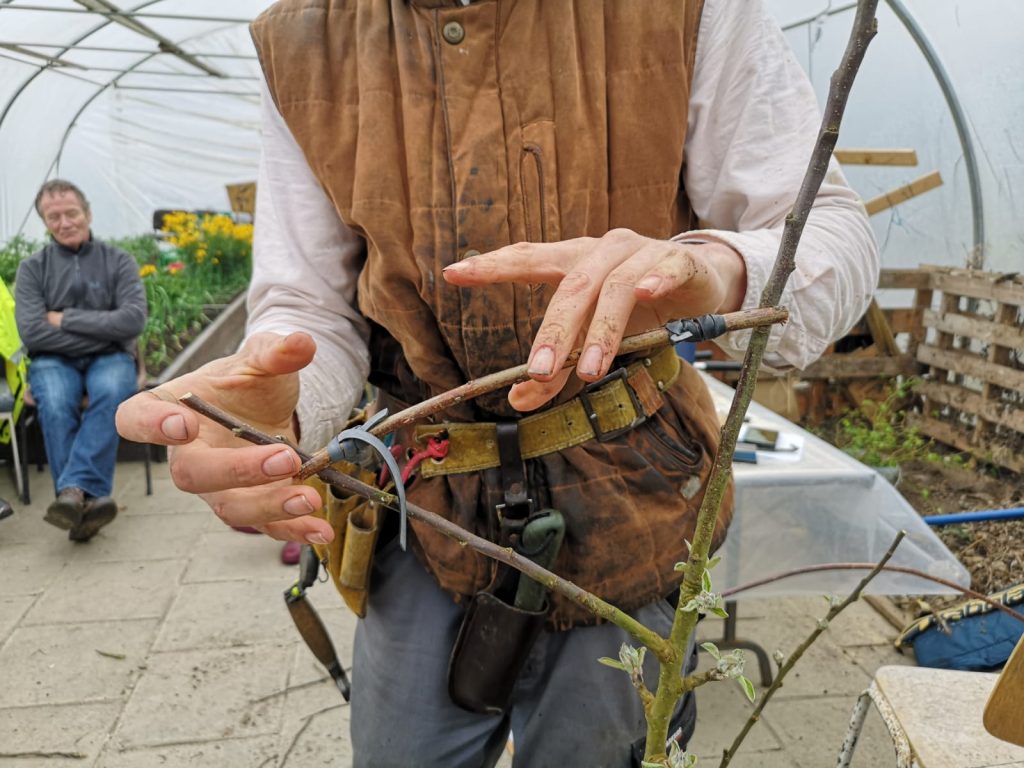
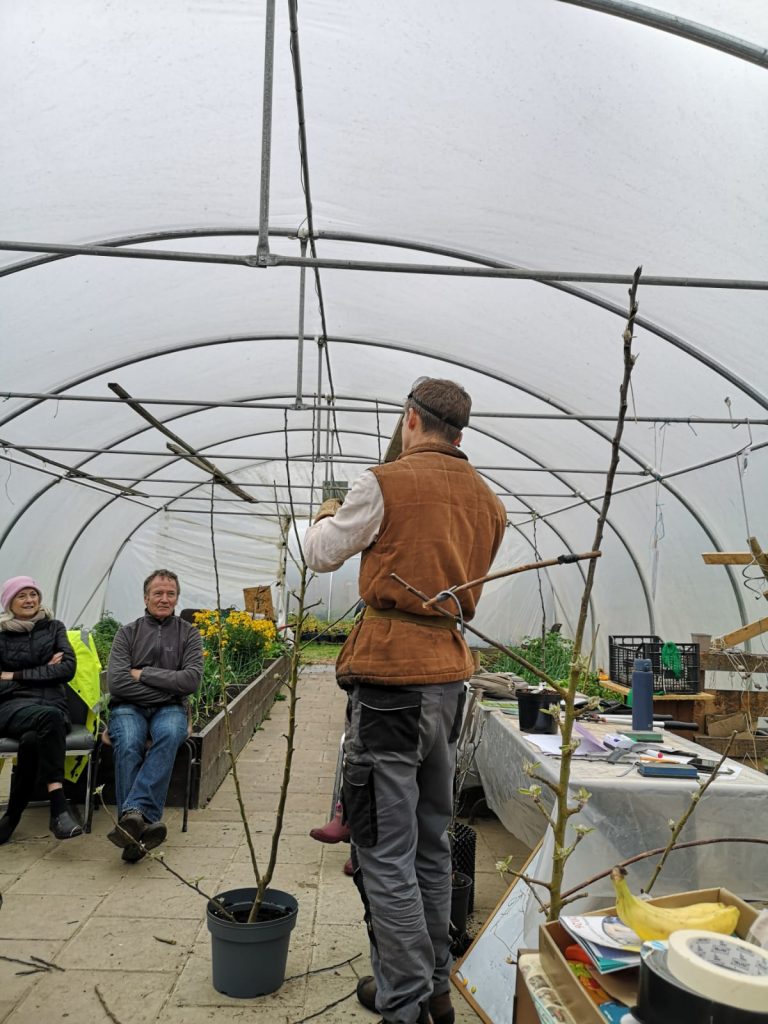
An apple tree before and after winter pruning
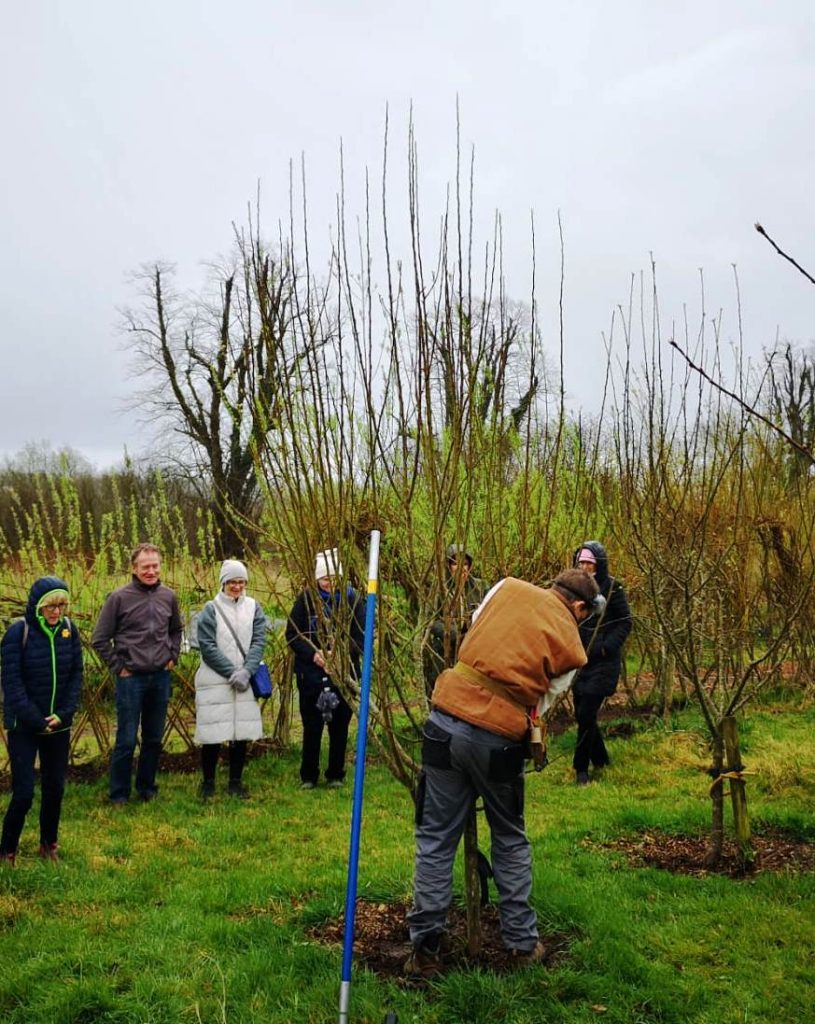
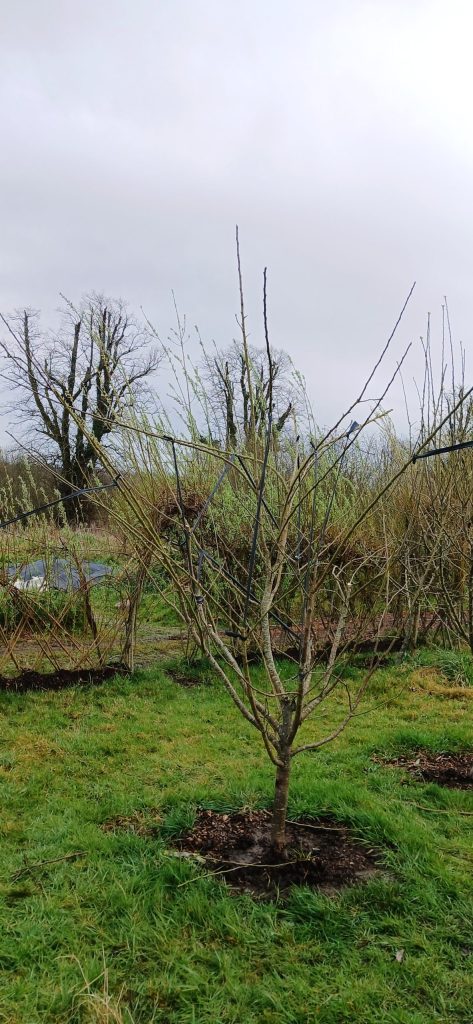
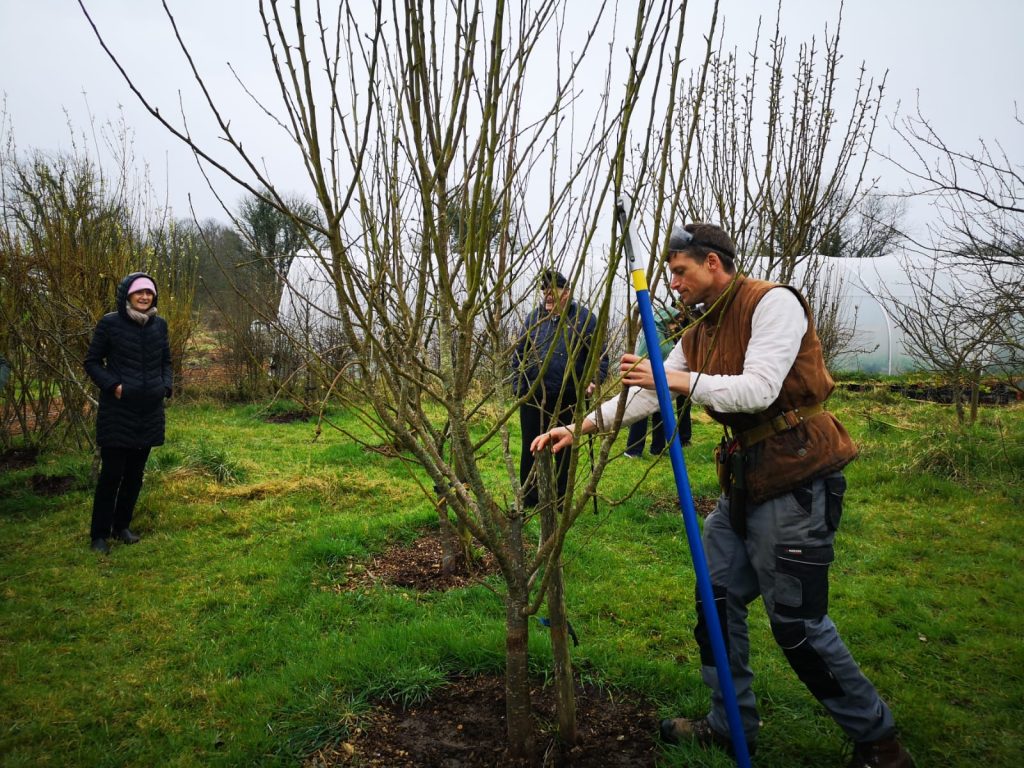
The image above on the left show a typical situation I encounter in my orchardist work. The centre leader of the tree was cut out and an open-center tree form was attempted. When this is abandoned, or even continued without propper and timely summer pruning, the tree is invigorated and sprouts many competing leaders, which in turn branch out and tangle with each other. I got to this orchard just in time as many of the leaders were still pliable enough to bend into a more horizontal habit. Another year or two and much more surgery would have been needed to begin to retrieve this tree.
Participant feedback
Enjoyed the course
Enjoyed the course
Edward P.
Natural Orchard Care
Enjoyed the course
Michael C.
Enjoyed it and learned alot
Enjoyed it and learned alot from it
Brendan and Joan O’Connor
Great information
Great information
Anne Murphy
Very interesting
Very interesting
E. Murphy
Natural orchard care
Very informative
Anne Goggin
Very good
Very good, needs to be a full day to cover more
Catherine Jung
Most Enjoyable
Most enjoyable, informative
Vanessa Hutch
Excellent
Excellent
Billy Noonan
Excellent Workshop
Excellent workshop pruning fruit trees
Mary Murphy

Amazing!!
It was amazing Paul!! Everything makes so much sense now : ) Go ahead with the quote Paul! I know we need YOU to explain it so clearly.
Miren, Bilbao language teacher

The theory and technique
What was the most valuable part of the course: Learning the theory and technique of summer pruning and the benefits of it.
Tadhg
Learn Sustainability Skills with Paul!
If you have a school, college, university, or community group that want to learn sustainability skills through English, Irish, French or Spanish then get in touch – it’s easy to make it happen! Just like this one, many of the workshops I teach are never listed in the online shop as they come about from individual requests from people who want real sustainability skills in their group/community or workplace.
Get in touch here to make a workshop or lecture enquiry: https://permaculturedesign.ie/contact/
I provide community groups, charities, allotment and community garden groups, businesses, social enterprises, local authorities, schools, universities and institutes of further education with professional sustainabilty education and consultation on a wide range of subjects including:
- Permaculture design
- Composting
- Orchard care
- Design your own garden
- Which trees and where to plant them
- Keyline design
- Flood and drought resilience
- Renewable energy
- Community resilience
- Energy resilience
- Community garden design
- Public spaces design
and many more topics related to sustainability.