
– Best apple year since 1420 in Shire reckoning –
In the final chapter of Tolkien’s epic “Lord of the Rings” saga Sam Gamgee “the gardener” spends the winter months planting trees “in all places where specially beautiful or beloved trees had been destroyed” after the turmoil that the War of the Ring wreaked on even the remote Shire.

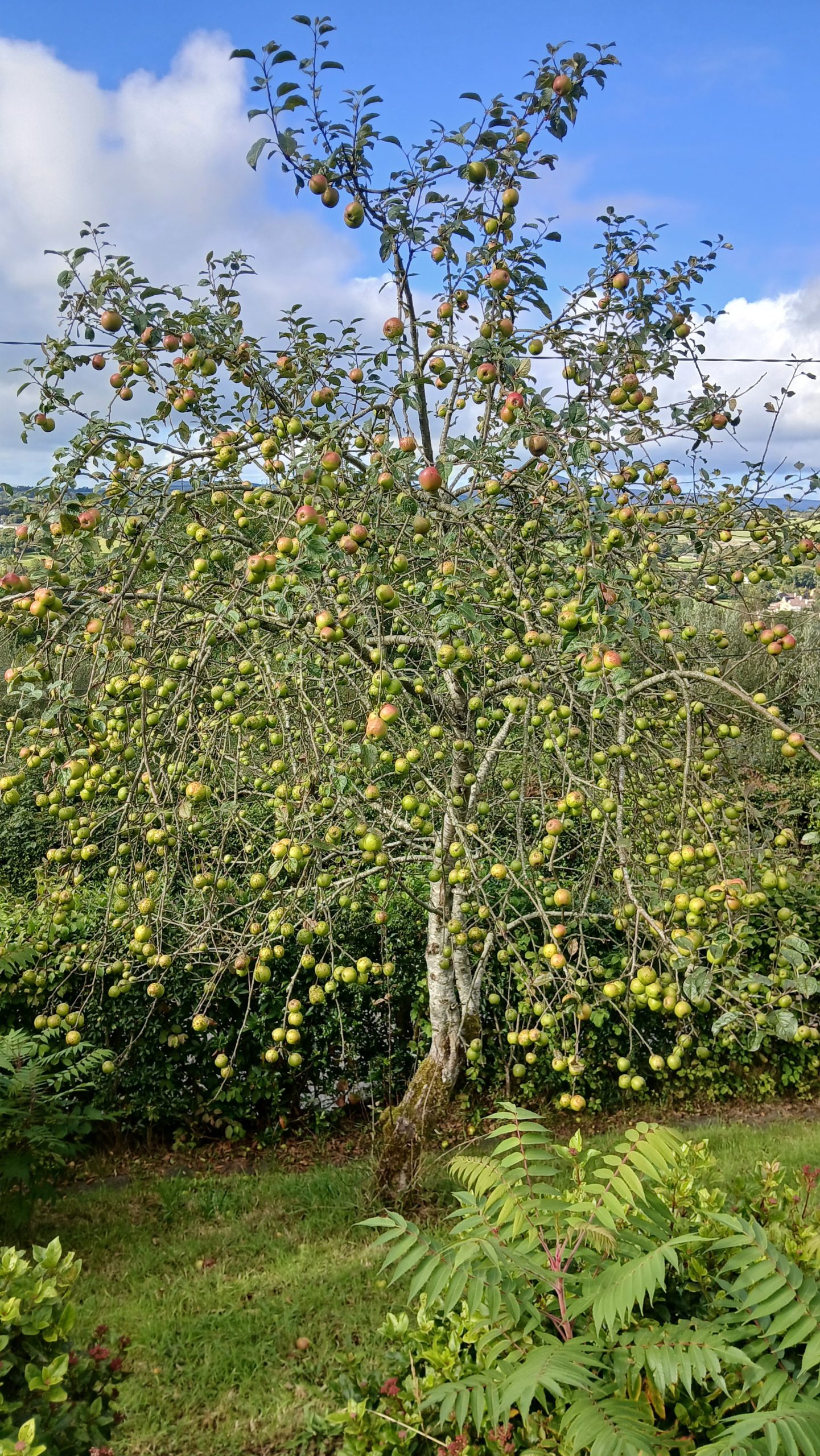
Above Right: 2025 Apple crops in Macroom to match the fabled year of 1420 in “Shire reckoning”. Above Left: Lord of the Rings Book Cover. Credit: www.john-howe.com
While planting and tending, he carefully scatters the grains of magic dust bestowed on him by Galadriel, the “Lady of the Woods”. Needless to say, the next year – 1420 (in shire reckoning) – provided perfect growing conditions and bumper crops.
“Altogether 1420 in the Shire was a marvelous year. Not only was there wonderful sunshine and delicious rain, in due times and perfect measure, but there seemed to be something more: an air of richness and growth, and a gleam of beauty beyond that of mortal summers that flicker and pass upon this Middle-earth.”
The harvests in 1420 were of appropriately epic proportions and quality:
The Northfarthing Barley was so fine that the beer of 1420 malt was long remembered and became a byword. Indeed, a generation later one might hear an old gaffer in an inn, after a good pint of well earned ale, put down his mug with a sigh: “Ah! That was proper fourteen-twenty, that was!
Tolkien from the final chapter of “The Lord of the Rings”
From the springtime of this year 2025, I was already drawing parallels with that fictional but very realistic epic harvest year in the Shire. In the spring there was a quality to the flowering trees I had never seen the like of, and can only describe as magical. The following fruit-set kept bearing along those epic lines, and most people with fruit trees noticed the bumper crop, and in the autumn many were scrambling to make provision for some worthwhile use of all that fruit.
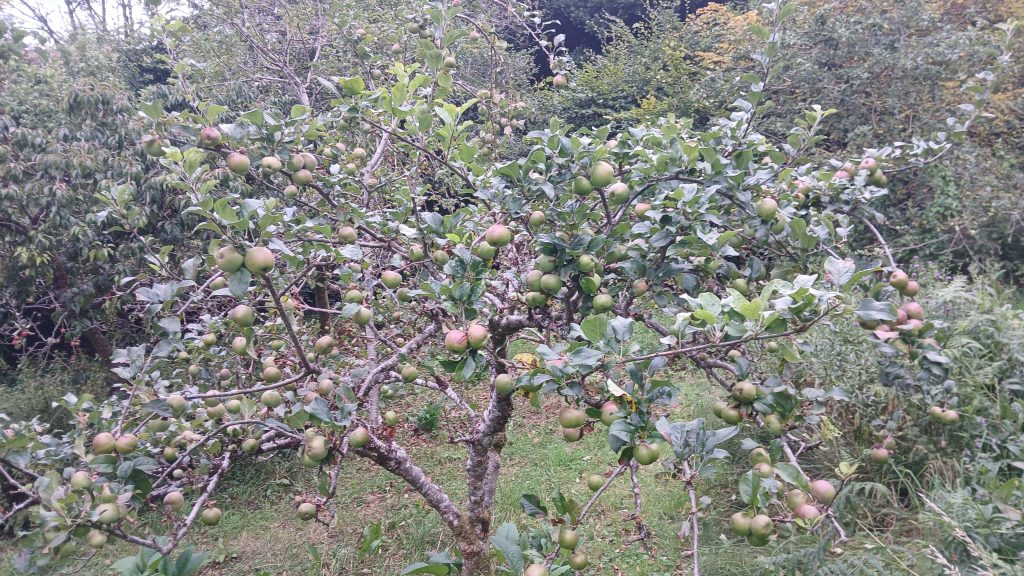
I discuss the climatic conditions that may have contributed to the epic fruit crop of 2025 here: https://permaculturedesign.ie/2025/05/22/may-orchard-update-bumper-fruit-crop/
The epic apple crop and harvest of Twenty-twenty-five.
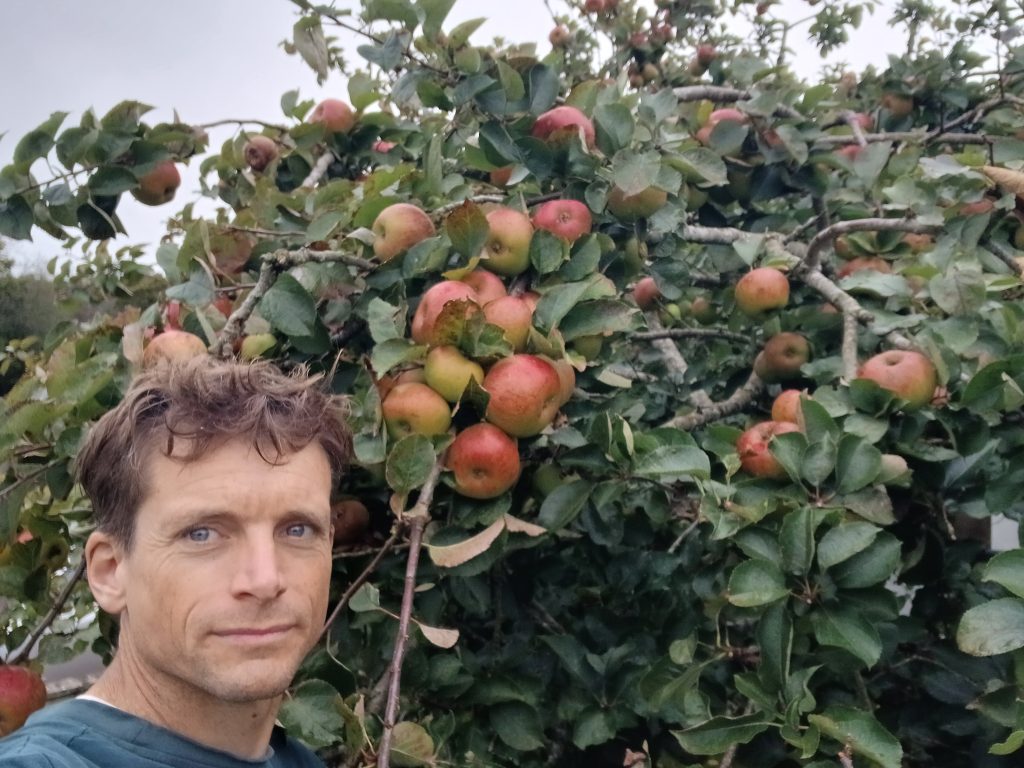
My family home garden in Macroom has apple trees that are about twenty or twenty five years old now. Early on I tried to form them along the lines of the classic open center shape. It was only after reading Fukuoka’s “One Straw Revolution” that I began to retrain them along the natural center leader shape, with, it must be said, good results and low maintenance requirements. The massive crop on the Dabinett variety shown above is not unusual of what was seen this year across Ireland.
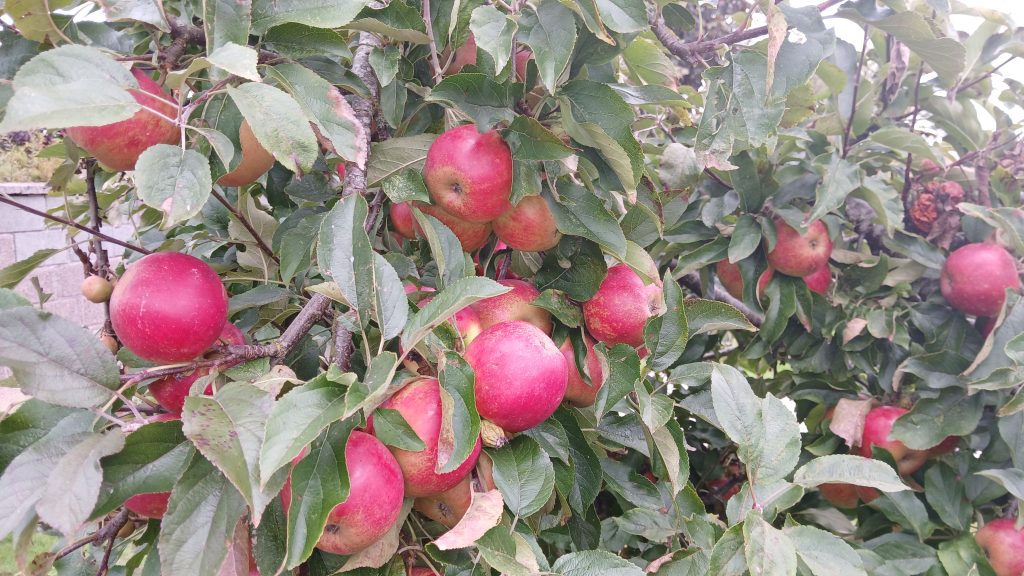
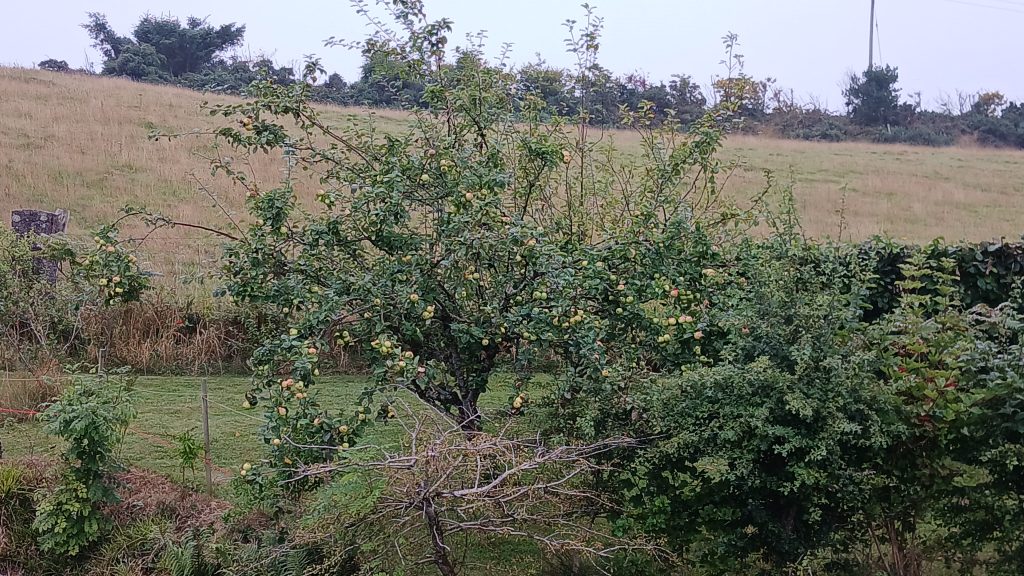
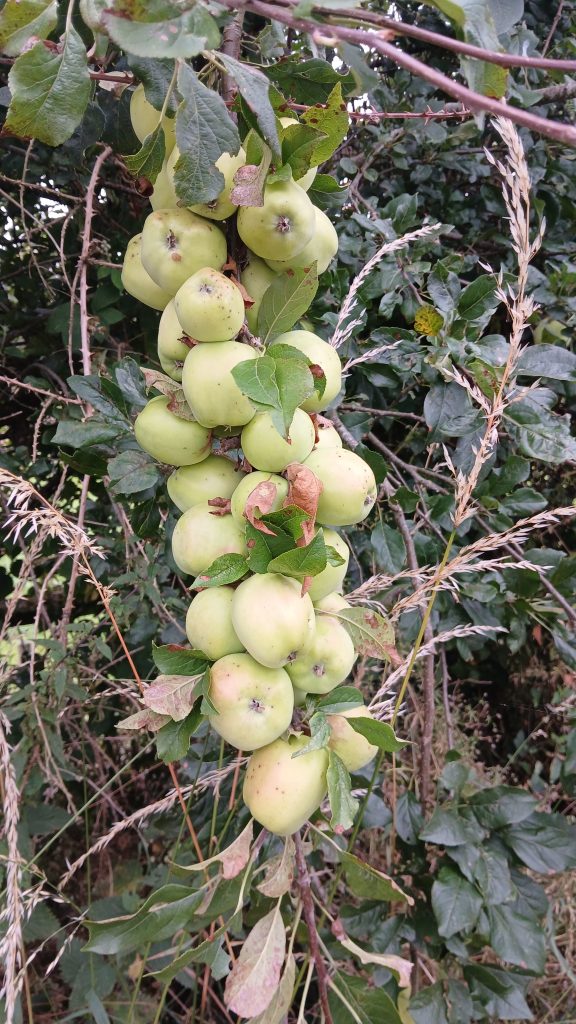
I was walking near Inchegeela in West Cork during the late summer and came across a fully grown chance seedling apple tree in the hedge. It was easy to spot as it was dripping with apples, as shown above. As it happens, the apples didn’t taste great at all, so it will probably remain a singular individual, fated to live and die much like ourselves and will never get propagated through the ages via grafting.
Apple Juice, Cider and Cider Vinegar
I bought a small cider press about 15 years ago (or more!) and have been making apple juice, cider and cider vinegar most years in various quantities since then.
When I was younger, cider was the most valued prize among the potential products. Now however, while I still appreciate the crisp bottled sunshine that is natural cider, it is cider vinegar that I value the most. Cider vinegar is so widely appreciated for it’s healthful properties that you don’t even need to be especially health conscious to have heard of the benefits.
Unfortunately one must first make cider in order to make cider vinegar, and you have to develop a bit of a hard heart to take the next step of turning the golden nectar into vinegar!
Self-sufficiency or Inter-dependence?
I really didn’t feel I had the time to do the gathering and processing this year to do the epic apple crop justice, so I tried to ignore it and concentrate on other “pressing” matters. But I couldn’t ignore it. Holmgren’s principle of “Take a Harvest” was burning in my mind. Thankfully I remembered that some of my customers in previous years had brought apples to the Apple Farm in County Tipperary to get them juiced.
I realised that this was the perfect year to try them out. I could put the little time I had into gathering the apples, and I could let the apple farm do the pressing, for what turned out to be a good value fee in my opinion.
Cider Meitheal: Tree crops and community development go hand in hand
Clubbing together to press juice is a natural way to harvest, process and consume the bounty of nature: there is a lot to do in a short burst and a large volume of product produced, some of which is a traditional beverage in community celebrations.
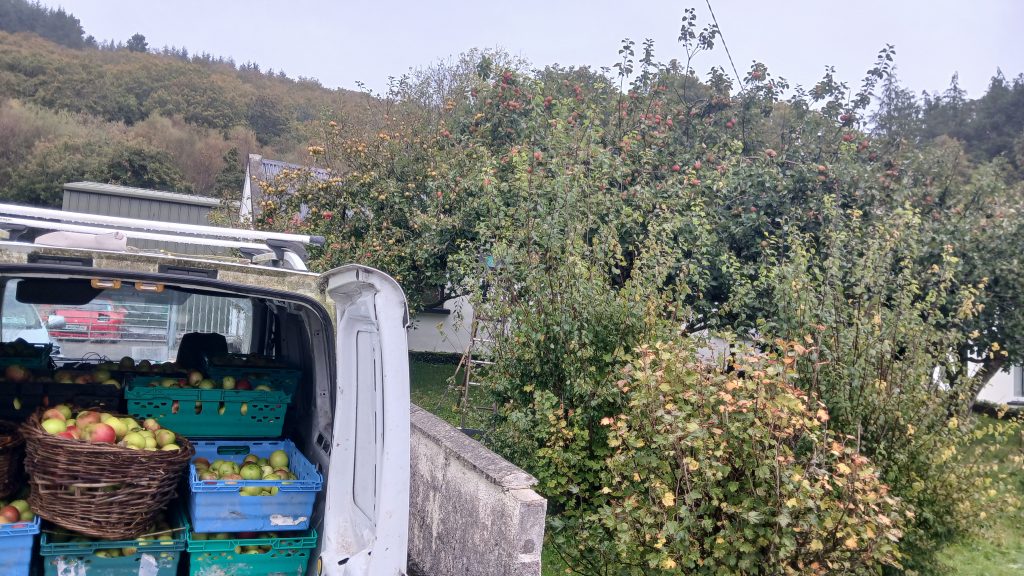
If you don’t have a big gang or the equipment available for home pressing, then a group can still club together to gather and transport the apples to a third party like the Apple Farm. I’m glad to have other stakeholders in this batch: friends who did some gathering with me, and some other apple tree owners.
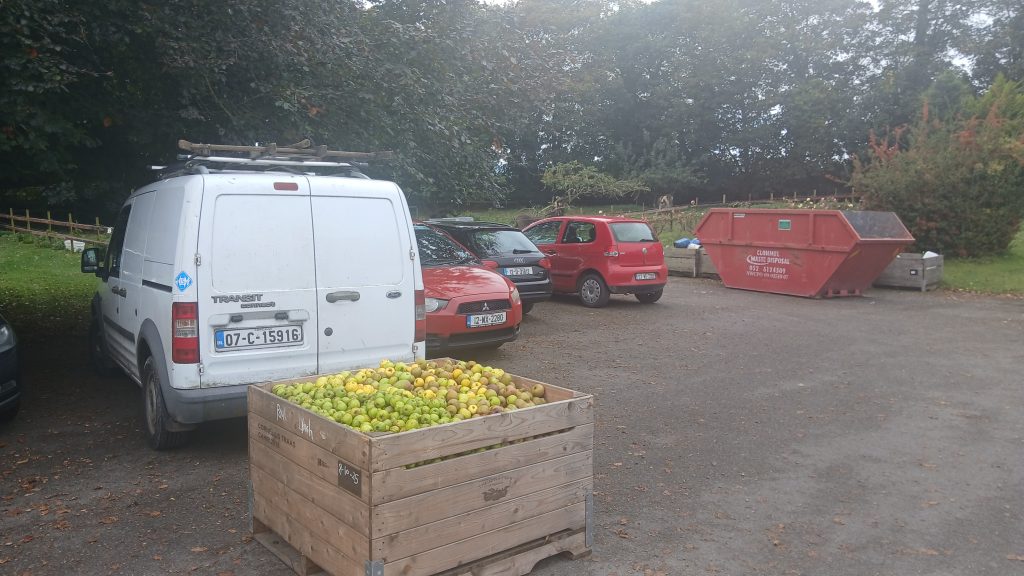
The “Apple Farm” pasteurised and bottled a good portion of the juice, which will make nice Christmas presents. The rest of the juice is wrapped up and brewing away in a shed on its natural yeasts, dreaming of the laughter and mirth of those eternal sunny spring days, where old friends meet in the orchard and share in gold.